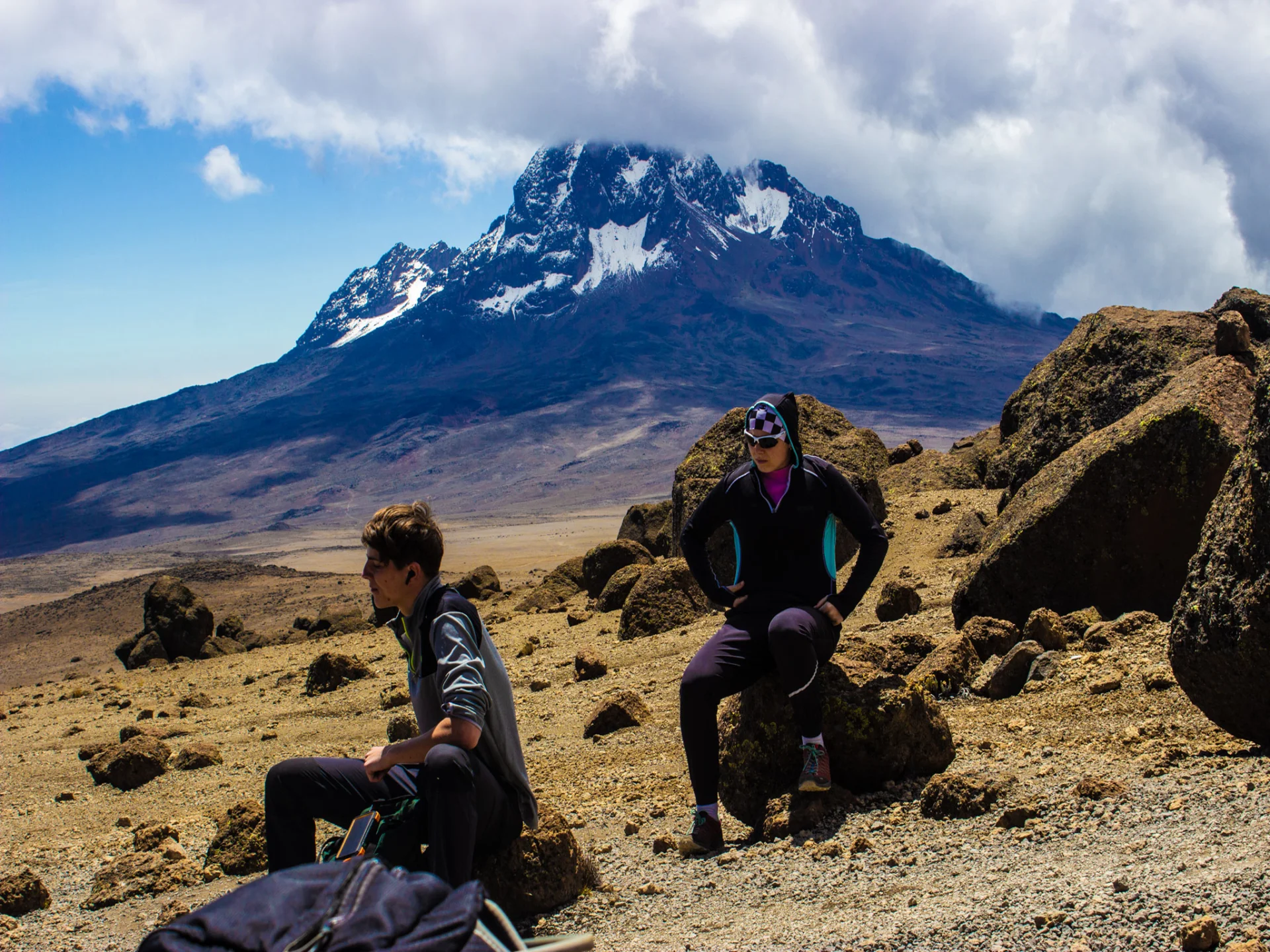
You will pass through every climate from warm rainforest to freezing summit, so the secret is layering.
Essential gear at a glance

Hiking boots
Waterproof, ankle-high and well broken-in before the climb.

Daypack (30–35 L)
Carries water, snacks, layers and camera during the day.

Duffel bag
Soft bag for the porters, up to about 15 kg.

Down jacket
Essential warmth for cold nights and summit day.

Waterproof jacket
A breathable shell for rain in the forest zone.

Sleeping bag
Rated to around -10°C. Rental available.

Headlamp
For summit night and camp, with spare batteries.

Trekking poles
Save your knees on steep descents.

Water bottles
Carry 3 litres; insulated bottles stop freezing.

Warm gloves
Liner gloves plus insulated gloves or mittens.

Warm hat
A beanie for evenings and the summit push.

Hiking socks
Several pairs of wool or synthetic socks.

Sunglasses
Category 3–4 lenses for glare near the glaciers.

Sunscreen & lip balm
High SPF: the sun is intense at altitude.
Clothing
- Base layers (thermal tops and leggings)
- Insulating fleece and a warm down jacket
- Waterproof jacket and trousers
- Hiking trousers and shirts
- Warm hat, sun hat, buff and gloves (liner and insulated)
Footwear
- Broken-in waterproof hiking boots
- Camp shoes and several pairs of hiking socks
Gear
- Sleeping bag rated to around -10°C (rental available)
- Daypack of 30–35 litres and a duffel bag for porters
- Headlamp with spare batteries, trekking poles, sunglasses
- Water bottles or hydration bladder (3 litres)
Porters carry up to about 15 kg of your gear, so pack thoughtfully.
Ready to climb?
Tell us your preferred dates and route and we will plan everything, from airport pick-up to your summit certificate.