Why altitude matters, the warning signs to watch for and how our guides keep you safe.
Uhuru Peak stands at 5,895 metres, where the air holds roughly half the oxygen available at sea level. Most climbers feel some effects of altitude, and managing it well is the key to a safe, successful climb.
Common symptoms
Headache, tiredness and shortness of breath
Loss of appetite or nausea
Difficulty sleeping
Serious symptoms such as confusion, loss of coordination or breathlessness at rest require immediate descent.
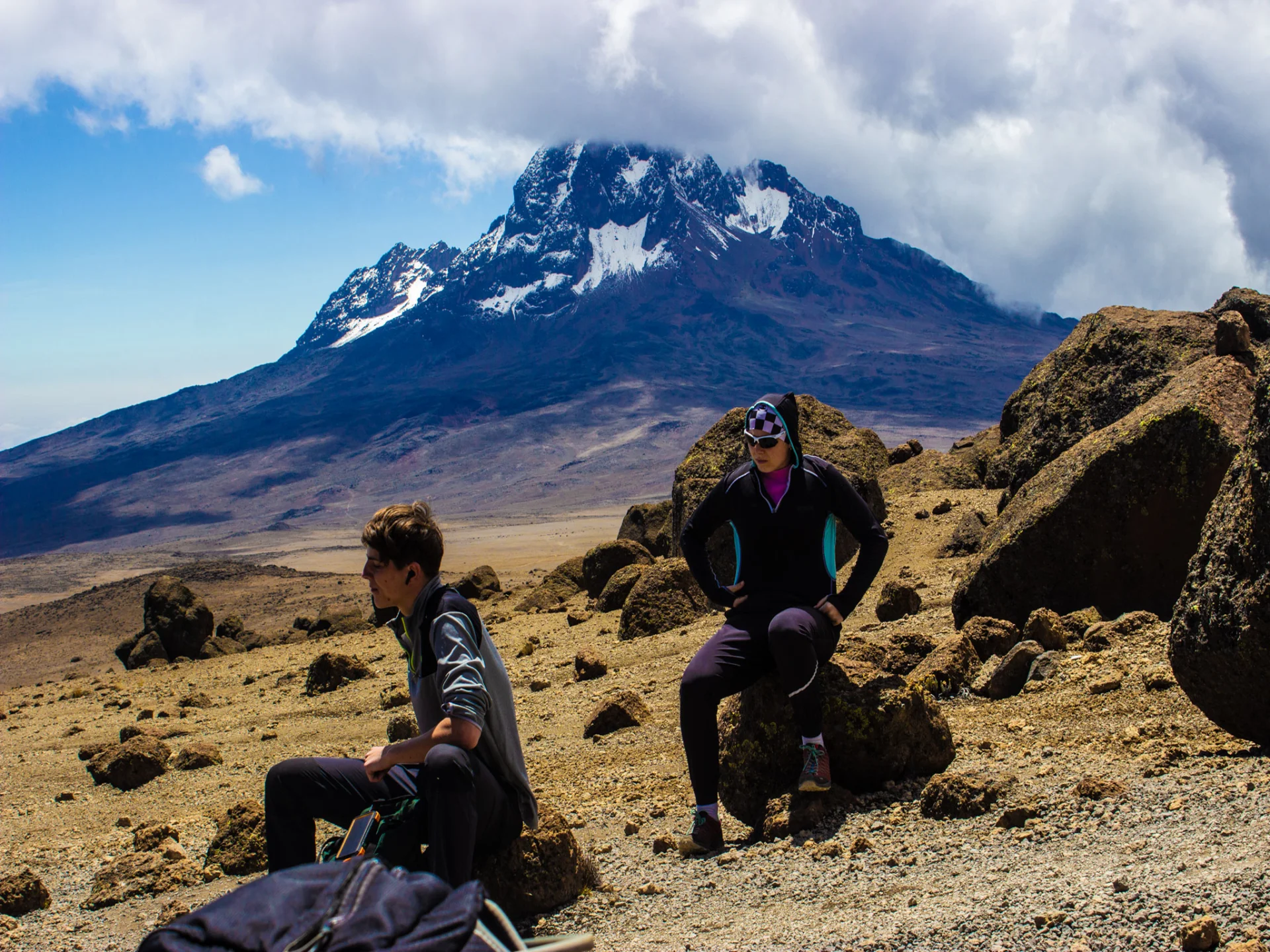
Rest often and listen to your body at altitude
How to acclimatise
Walk slowly: "pole pole" is the golden rule
Drink 3–4 litres of water a day
Choose a route with "climb high, sleep low" days
Tell your guide honestly how you feel
Staying well hydrated helps your body adjust
Daily health checks
Guides check every climber's health each day, often including a quick blood-oxygen reading with a pulse oximeter, and will always put your safety first.
A pulse oximeter gives a quick blood-oxygen reading
Ready to climb?
Tell us your preferred dates and route and we will plan everything, from airport pick-up to your summit certificate.