

The Socialist Peak · Tanzania's second-highest mountain
Arusha National Park · 14,968 ft / 4,562 m
Photo: Ceraa Eyes Safari
Mount Meru, often thought of as the lovely sister of Kilimanjaro, is celebrated for tranquil trails, dramatic volcanic landscapes and abundant biodiversity. The trek starts in a wildlife haven, with giraffes, buffaloes, zebras and monkeys wandering at will.
01On the Mountain
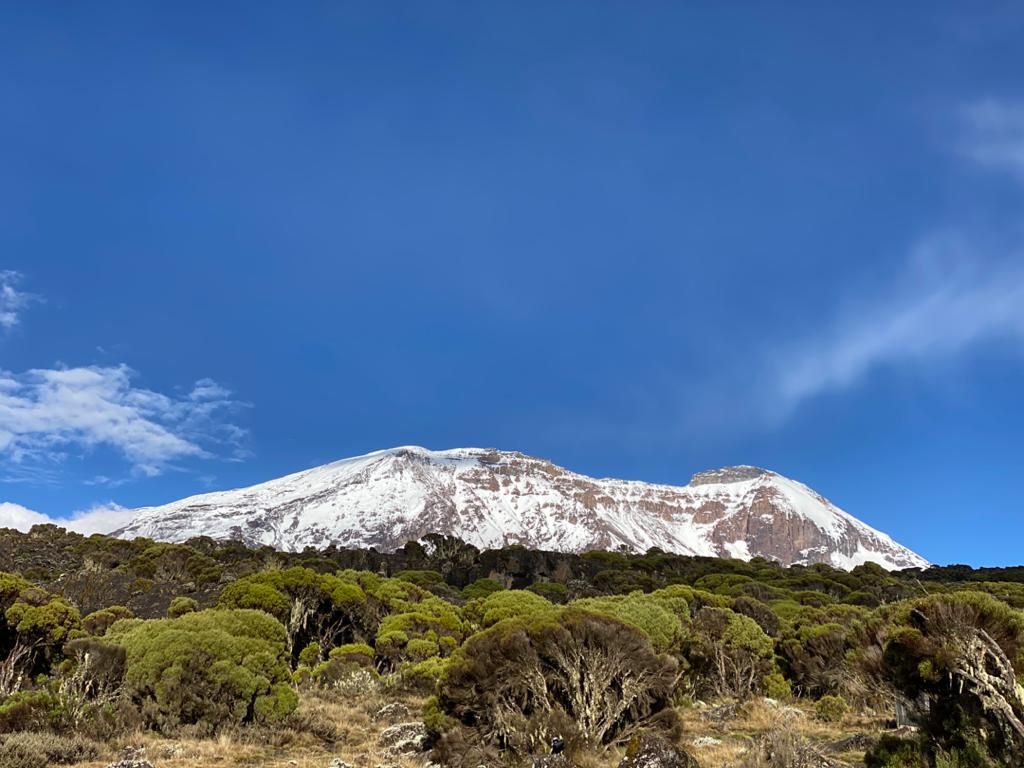


02Mount Meru in Brief
To the Wameru (Va-Rwa) people Mount Meru is much more than a mountain: it lies at the centre of their cultural, spiritual and historical identity. Oral tradition says the Wameru settled its fertile southeastern slopes some 300–400 years ago, having moved from the Usambara Mountains and the Kilimanjaro area, and lived peacefully alongside the native Koningo people. The mountain has long been seen as sacred, where clan elders offered prayers and rituals for rain, health and the wellbeing of the community. In colonial times Mount Meru became a symbol of resistance as the Wameru defended their ancestral land, and the Meru Land Case of the 1950s helped shape Tanzania's road to independence.
03Why Ascent Mount Meru?
- Walking beside wildlife in Arusha NP
- Dense tropical rainforest
- Pretty waterfalls & streams
- Giant volcanic cliffs
- Spectacular crater views
- Quieter than Kilimanjaro
- Great acclimatisation before Kili
- A glorious sunrise from Socialist Peak
- Stunning views of Mount Kilimanjaro
400+ bird species · colobus monkeys · giraffes · buffaloes · elephants (now and then) · leopards (seldom seen) Mount Meru counts among the most biodiverse mountains in Africa.
Flora & Fauna
Wildlife: Giraffes, buffaloes, zebras, warthogs, bushbucks, colobus monkeys, blue monkeys, hyenas, an occasional elephant and leopards (rarely spotted).
Birds: Over 400 bird species have been recorded in Arusha National Park.
Plants: Plant life here includes wildflowers, bamboo, giant heather, cedar forest, juniper, giant lobelia, wild olive and giant groundsel.
Mountain Terminologies
| Term | Definition |
|---|---|
| Altitude | Distance above sea level. |
| Summit | The top of a mountain. |
| Trekking | Covering long distances on foot in natural surroundings. |
| Acclimatization | Giving your body time to adapt slowly to the altitude. |
| Ascent / Descent | The trek up and back down the mountain. |
| Crater / Ash Cone | A volcanic hollow containing a smaller cone within Meru's crater. |
| Ridge | A narrow raised ridge linking two slopes. |
| Porter / Guide / Ranger | A porter to haul the gear; a skilled lead guide; a park ranger with a weapon. |
04Ecological Zones of Mount Meru
1. Cultivated Foothills (1,200–1,500 m)
Villages and rich farmland. Coffee, bananas, maize, vegetables and flowers.
2. Montane Forest (1,500–2,800 m)
Thick rainforest of tall trees, mosses and waterfalls, home to buffaloes, giraffes, monkeys and many birds.
3. Heath and Moorland (2,800–4,000 m)
Open moorland, giant heather, giant lobelia, bright wildflowers and sweeping views.
4. Summit Zone & Alpine Desert (Over 4,000 m)
Rocky, open and thinly vegetated. Volcanic ash, rugged ridges and crater scenery, with Socialist Peak looking towards Kilimanjaro.
05Best Time to Visit
January – March: Warm weather, clear skies, lush greenery and fine sunrise views.
June – October: The busiest season; cool and dry with firm trails, panoramic views and easier wildlife spotting.
November – December: Short rains, greener scenery, fewer visitors, the odd shower.
March – May: Heavy rains and slippery trails, but quieter paths for hikers who like a challenge.
Why dry season? Bright skies, safer paths, striking sunrises, excellent game viewing and ideal photographic conditions.
06Choose Your Ascent
Each of the two itineraries uses the Momella Route, Mount Meru's sole official trekking path, and the main differences lie in how fast you go and how much time you get to adjust to the altitude.
A faster route to the summit for climbers short on time. Momella Gate to Miriakamba, then Miriakamba to Saddle Hut, followed by the midnight summit push and the full descent to Momella Gate.
See the 3-day itinerary & pricing →
After the summit, we advise an extra night at Miriakamba Hut, which makes the descent gentler and gives you more time to recover before returning to Arusha.
See the 4-day itinerary & pricing →
Full 4 Days Itinerary
Day 1 · Hike Momella Gate through to Miriakamba Hut
4–5 h Miriakamba Hut
A scenic walk through lush forest, where giraffes, buffalo and birds are a good bet.
Day 2 · Trek Miriakamba Hut onward to Saddle Hut
4–5 h Saddle Hut
The path climbs steadily into alpine meadows and rugged terrain, with views across Meru's crater towards distant Kilimanjaro.
Day 3 · From Saddle Hut to the Summit and back down to Miriakamba Hut
Socialist Peak
10–12 h Miriakamba Hut
Setting off at midnight, you push for the summit and reach the Peak at sunrise, enjoying wide views over the Serengeti Plains, Ngorongoro Crater and Kilimanjaro, then descend to Miriakamba for the night.
Day 4 · From Miriakamba Hut back to Momella Gate
2–3 h, transfer to Arusha
An easy last descent through the forest, with a fair chance of spotting more wildlife before you complete exit formalities at the gate.
Accommodation
Before the climb: In Arusha the options are Mount Meru Hotel, Kibo Palace, Forest Hill, Four Points and Gran Meliá.
On the mountain: Cosy huts rather than tents: Saddle Hut at 3,570 m and Miriakamba Hut at 2,500 m, providing beds, dining areas and toilets.
07Why Ceraa Eyes Safari
- A seasoned mountain crew — trained guides, cooks and porters.
- Safety first — daily health checks and acclimatisation monitoring.
- Good equipment — clean and dependable gear.
- Personalised service — solo, couples, families, groups.
- Local knowledge — Tanzanian-owned, genuine experiences.
- Smooth logistics — transfers, accommodation and safari extensions are all handled.
- Great support — ahead of your trip, while you travel and once you are home.
We value every step of your adventure.
Quick Facts
| Height | 4,562 m (14,968 ft) |
| Location | Arusha National Park |
| Type | Dormant volcano · last small eruption 1910 |
| Summit | Socialist Peak |
| Route | Momella Route (the only official one) |
| Best time | Jan–Mar, Jun–Oct |
| Duration | 3 or 4 days |
| Accommodation | Mountain huts (Miriakamba & Saddle) |
| Wildlife | Over 400 bird species, plus giraffes, buffaloes, zebras and monkeys |
| Cultural significance | Holy to the Wameru people |