

Africa's Highest Point · 5,895 m / 19,341 ft
Tanzania · Seven Summits · World Heritage Site by UNESCO
Photo: Ceraa Eyes Safari
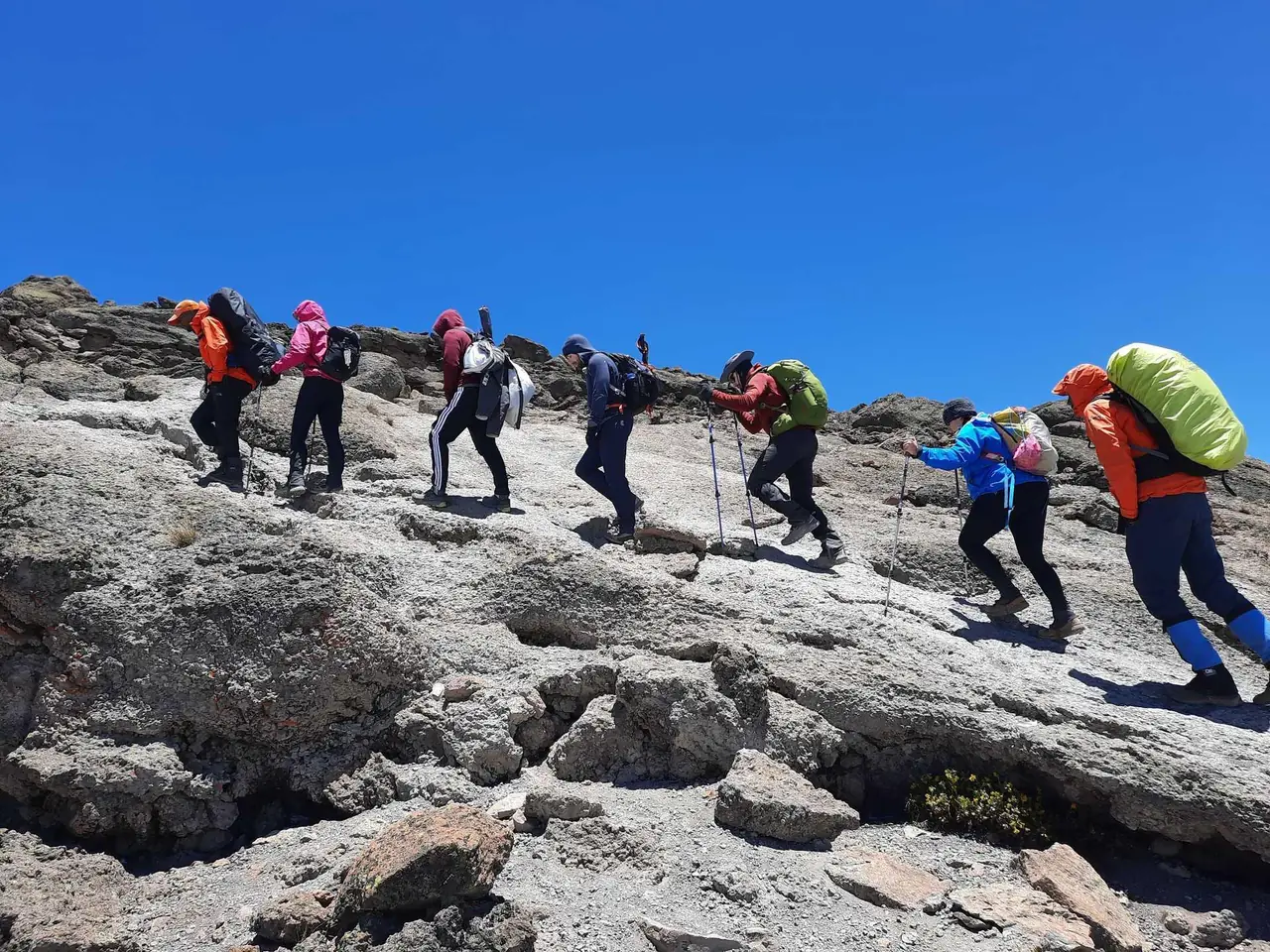
Kilimanjaro is a trekking peak rather than a technical climb. Given solid preparation and plenty of determination, the Roof of Africa can be yours.
01On the Mountain

02Kilimanjaro in Brief
Kilimanjaro was born millions of years ago from immense volcanic activity, which gradually built three cones: Shira (the oldest, now a plateau), Mawenzi (jagged and dramatic) and Kibo (the tallest, crowned by Uhuru Peak). The Chagga people have farmed coffee and bananas on its fertile slopes for centuries. Johannes Rebmann reported snow near the Equator in 1848, and in 1889 Hans Meyer, Ludwig Purtscheller and the Chagga guide Yohani Lauwo became the first to reach the top. When Tanzania gained independence in 1961, the summit took the name Uhuru Peak "Freedom Peak" an emblem of pride and achievement. It is now a UNESCO World Heritage Site that draws thousands of visitors each year.
03Uhuru Peak – The Roof of Africa
Rising to 5,895 m (19,341 ft), Uhuru Peak is Africa's highest point. "Uhuru" is Swahili for "Freedom." Reaching it is a moment of celebration and personal triumph, a memory to keep for life, with ancient glaciers, endless sky and a golden sunrise around you.
Being at Uhuru Peak is far more than reaching a destination; it is a moment you will never repeat, when dreams turn real.
04What Sets Kilimanjaro Apart?
- Africa's tallest mountain
- The tallest free‑standing mountain on Earth
- Five separate ecological zones
- Snow on the Equator
- One of the Seven Summits
- No technical climbing skills needed
- A glorious sunrise from Uhuru Peak
- UNESCO World Heritage Site
Seven Summits · Kilimanjaro is one of the highest peaks on each continent, so climbers from all over the world put it on their bucket list.
05Best Time to Visit
January – March: Cool temperatures, clear skies, fewer climbers and snow on the summit.
June – October: Dry and sunny with excellent visibility and the highest success rates.
November – December: Quieter parks, green scenery and pleasant weather.
April – May: Heavy long rains, muddy tracks and cloud cover make these months a poor choice.
Pro tip: Climbing under a clear full moon in winter is ideal, as the moonlight glowing on the glaciers means headlamps are not required.
06Climbing Routes
Machame (Whiskey)
Moderate–Challenging Camping Spectacular scenery
The busiest route on the mountain, built on the "climb high, sleep low" acclimatization approach and passing through rainforest, moorland and alpine desert on the way to Uhuru Peak. View the 6-day Machame trip →
Marangu (Coca‑Cola)
Moderate Huts Best for first‑timers
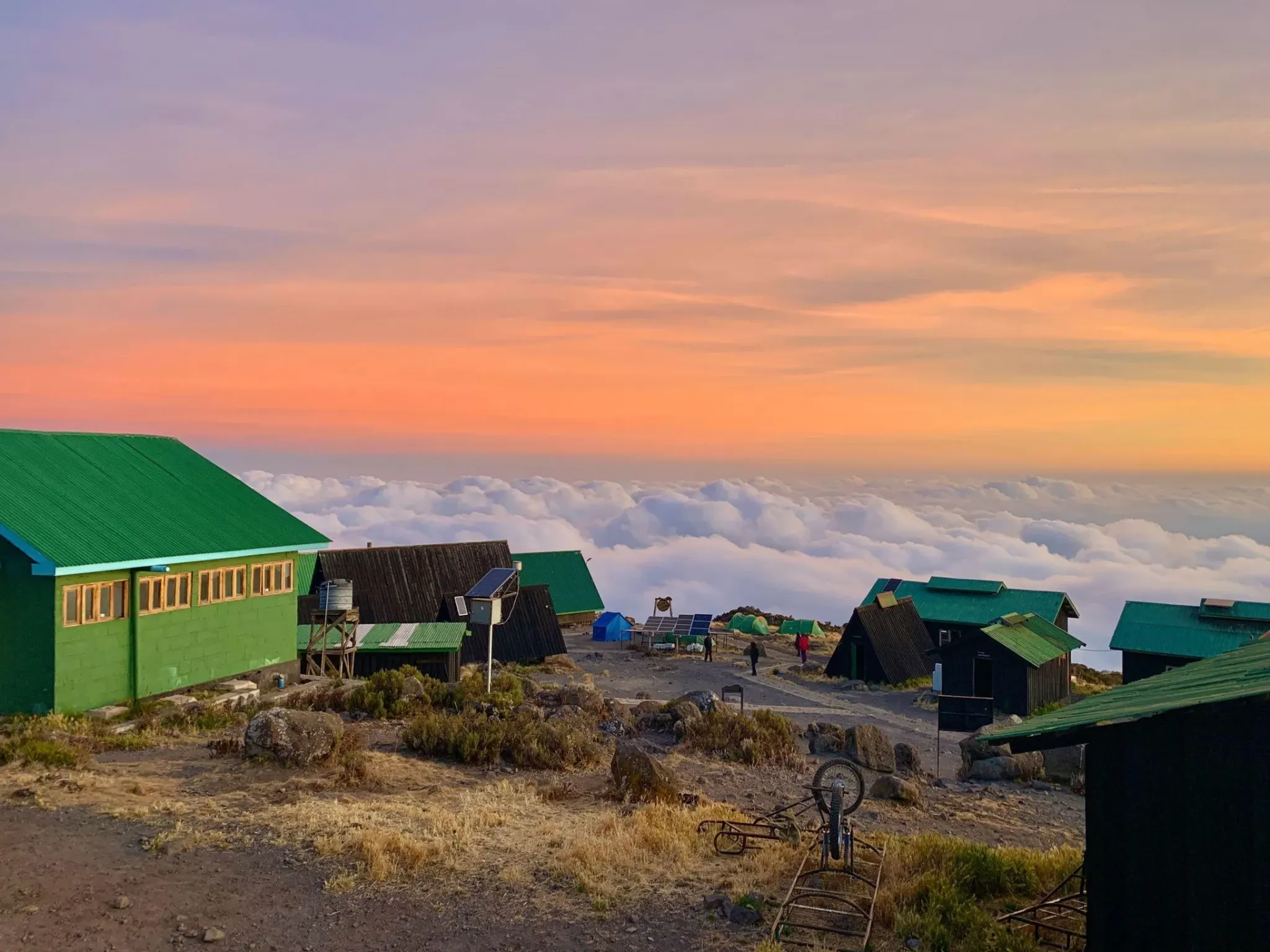
The only route with mountain huts rather than tents, which makes it a comfortable pick for first-time climbers heading to Uhuru Peak. View the 5-day Marangu trip →
Lemosho 7–8 d · Moderate · Camping · High success rate, thinner crowds.
Rongai 6–7 d · Moderate · Camping · Peaceful, gradual climb from the north side.
Northern Circuit 8–9 d · Moderate · Camping · Superb acclimatisation, best summit odds.
Umbwe 5–6 d · Challenging · Camping · Steep, adventurous.
07Five Ecological Zones
Cultivation (800–1,800 m)
Rainforest (1,800–2,800 m)
Heath and Moorland (2,800–4,000 m)
Alpine Desert (4,000–5,000 m)
Arctic Summit (above 5,000 m)
08Kilimanjaro's Glaciers
Furtwängler Glacier – near Kibo summit, thinning rapidly.
Rebmann Glacier – the southern ice field, which takes its name from a missionary in 1848.
Credner Glacier – northwest side of Kibo.
Diamond Glacier – a steep field of ice on the south-western flank that forms part of the Messner Route.
Because of climate change, the glaciers are retreating. A climb now is a rare chance to see these tropical glaciers.
09Acclimatisation & Altitude Sickness
Acclimatisation means your body adapting to thinner oxygen at altitude. Possible symptoms are headache, nausea, tiredness, dizziness, breathlessness, poor appetite and trouble sleeping. Guides check everyone's health every day.
- Drink plenty of water
- Take it slowly: "Pole Pole" (slowly, slowly)
- Pick a longer route to adjust to the altitude more gradually
- Eat nutritious meals
- Do as your guide tells you
Recommendation: 6–8 day routes dramatically improve summit success.
10Kilimanjaro Terminology
| Term | Meaning |
|---|---|
| Acclimatisation | Time for the body to adapt to high altitude and thinner air. |
| Summit | The top of a mountain. |
| Trekking | Walking through natural landscapes. |
| Altitude | Height above sea level. |
| Ascent / Descent | Going up / coming down. |
| Glacier | Permanent ice mass. |
| Scree | Small, loose volcanic stones. |
| Moraine | Rock and soil deposited by glaciers. |
| Pole Pole | The Swahili way of saying "slowly, slowly", which is the pace we suggest. |
| Uhuru Peak | Highest point (5,895 m). |
| Porters | Crew who carry supplies. |
| Summit Night | The final night ascent to Uhuru Peak. |
11Frequently Asked Questions
Can beginners climb? Yes – no technical experience needed.
How likely am I to reach the summit? Extended itineraries give better summit odds thanks to improved acclimatisation.
How cold is the summit? Can drop to -20°C during summit night.
Do I need oxygen? Normally no; emergency oxygen is carried.
Can children climb? Recommended minimum age is 10 years (differs by operator).
Will I need travel insurance? Yes, with high‑altitude trekking cover.
Can I charge my phone? The mountain has no charging facilities, so pack a power bank.
Is there internet? Some stretches have mobile signal; reliable Wi-Fi is not available.
12Why Ceraa Eyes Safari
- Experienced, licensed mountain guides
- Friendly porters & skilled cooks
- High‑quality camping equipment
- Health and oxygen checks every day
- Excellent safety standards
- Airport transfers & personal service
- Strong summit success rates
- 24/7 customer support
Quick Facts
| Height | 5,895 m (19,341 ft) |
| Type | Dormant volcano (Kibo, Mawenzi, Shira) |
| Summit | Uhuru Peak (on Kibo) |
| Location | Northeastern Tanzania |
| UNESCO | World Heritage Site |
| Seven Summits | Yes – highest in Africa |
| Best time | Jan–Mar, Jun–Oct |
| Recommended duration | 6–8 days |
| Accommodation | Huts (Marangu) or camping |
| Glaciers | Furtwängler, Rebmann, Credner, Diamond |
Chat with Us